具身智能 (Embodied AI):当人工智能拥有了身体
想象一下,你有一个非常聪明的“大脑”,它读过世界上所有的书,能写出优美的诗歌,能解答最复杂的数学题——这就是我们熟知的 ChatGPT 或 Claude 这类人工智能。
但是,如果你让这个“大脑”帮你倒一杯水,它做不到。因为它没有手,没有眼睛,它被困在冰冷的服务器机房里,只能通过屏幕上的文字和你交流。
现在,如果我们要把这个绝顶聪明的“大脑”,装进一个有手有脚、能看能听的机器人身体里,让它能够像人一样在物理世界里走动、操作物体、感知冷暖——这就是“具身智能” (Embodied AI)。
什么是具身智能?
简单来说,具身智能 = AI大脑 + 物理身体。
- 传统AI (Internet AI):像是一个住在云端的哲学家。它学习的是互联网上的图像、文本和视频。它“知道”什么是苹果,但从未“拿过”苹果。
- 具身智能 (Embodied AI):像是一个生活在现实中的学徒。它不仅要理解世界,还要与世界互动。它不仅知道蘋果是红色的,还能伸出手,通过传感器感知苹果的重量和表面的光滑,并把它把你洗干净递给你。
一个生动的比喻
这就好比学游泳。
- 传统AI 就像是在岸上看了1000本《游泳教程》的人。即使他背熟了所有动作要领,一旦把他丢进水里,他可能还是会沉下去,因为他从未体验过水的阻力、浮力和呛水的感觉。
- 具身智能 就像是一个在水里扑腾的初学者。通过不断的尝试(Trial and Error),他的身体感受到了水流,肌肉记住了如何发力。最终,他不仅学会了游泳,还能在不同的水域(泳池、河流、大海)里应对自如。
具身智能的三大核心能力
为了让“大脑”和“身体”完美配合,具身智能需要掌握三大核心技能:
感知 (Perception) —— “这就好比眼睛和耳朵”
机器人需要看懂周围的环境。不仅是识别出“这是一把椅子”,还要知道“这把椅子离我也多远,我能不能搬动它,有没有挡住我的路”。决策 (Interaction) —— “这就好比大脑的运动皮层”
看到环境后,机器人需要决定怎么做。比如,如果你命令它“去把那杯咖啡拿给我”,它需要在毫秒级的时间内规划路径:避开地上的猫,伸出机械臂,控制手指的力度(太轻拿不起来,太重会捏碎杯子)。执行 (Control) —— “这就好比肌肉和神经”
最后,指令需要传递给机器人的关节和马达。这需要极高的精确度,就像外科医生做手术一样稳定。
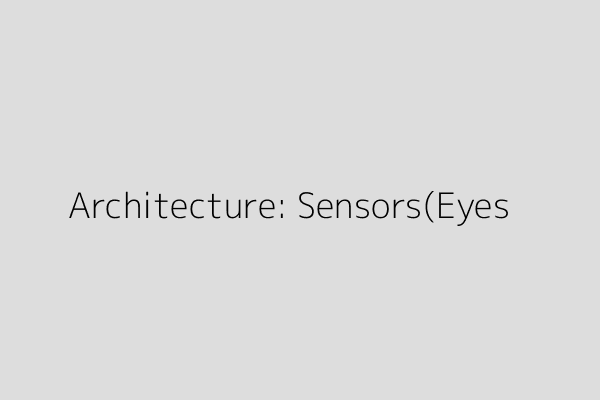+-%3E+AI_Brain(Planning)+-%3E+Actuators(Hands))
(图注:具身智能的工作流程:传感器收集信息 -> AI大脑处理并决策 -> 执行器完成动作)
为什么现在突然火了?
具身智能并不是一个新概念,但近年来它突然成为了科技界的“顶流”,原因主要有两点:
- 大模型的突破:以前的机器人比较“笨”,只能在固定的工厂流水线上做重复动作。现在,有了像 GPT-4 这样强大的大模型作为“大脑”,机器人能听懂更复杂的指令(比如“我渴了”,而不仅仅是“取水”),并具备了常识推理能力。
- 硬件成本降低:激光雷达、传感器、以及像特斯拉 Optimus 这样的人形机器人硬件平台的成熟,为具身智能提供了更好的“身体”。
未来的应用场景
当AI走出屏幕,走进现实,我们的生活将发生翻天覆地的变化:
- 家庭保姆:不再是只能吸尘的扫地机器人,而是能叠衣服、做饭、照顾老人的全能管家。
- 危险作业:在火灾现场、深海探险或核泄漏区域,代替人类去执行高风险任务。
- 工业制造:在柔性制造工厂中,与人类工人并肩工作,应对定制化、非标准化的生产任务。
结语
具身智能是人工智能发展的终极形态之一。它标志着AI从**“旁观者”变成了物理世界的“参与者”**。虽然目前我们看到的机器人可能还有点笨拙,走路摇摇晃晃,但请给它们一点时间。正如那个刚下水的学徒,终有一天会成为奥运冠军。
Embodied AI: When Artificial Intelligence Gets a Body
Imagine you possess a brilliant “brain” that has read every book in the world, can compose beautiful poetry, and solve the most complex mathematical problems—this is the Artificial Intelligence (AI) we know today, like ChatGPT or Claude.
However, if you ask this “brain” to pour you a glass of water, it fails. Why? Because it has no hands, no eyes, and is trapped within cold server rooms, communicating with you only through text on a screen.
Now, imagine we take this supremely intelligent “brain” and install it into a robot body equipped with hands, legs, vision, and hearing. We allow it to walk in the physical world, manipulate objects, and sense temperature just like a human. This is “Embodied AI.”
What is Embodied AI?
Simply put, Embodied AI = AI Brain + Physical Body.
- Traditional AI (Internet AI): Like a philosopher living in the clouds. It learns from images, text, and videos on the internet. It “knows” what an apple is conceptually but has never “held” one.
- Embodied AI: Like an apprentice living in reality. It must not only understand the world but interact with it. It doesn’t just know an apple is red; it can reach out, feel the apple’s weight and smooth surface via sensors, wash it, and hand it to you.
A Vivid Analogy
Think of it as learning to swim.
- Traditional AI is like someone who has read 1,000 books on “How to Swim” while sitting on the shore. Even if they memorize every movement, throw them into the water, and they might sink because they have never experienced the resistance of water, buoyancy, or the sensation of choking on water.
- Embodied AI is like a beginner splashing around in the pool. Through constant “Trial and Error,” their body feels the currents, and their muscles remember how to exert force. Eventually, they not only learn to swim but can adapt to different waters (pools, rivers, oceans).
The Three Core Pillars
For the “brain” and “body” to coordinate perfectly, Embodied AI needs to master three core skills:
Perception — “These are the eyes and ears”
The robot needs to understand its surroundings. It’s not just about identifying “this is a chair,” but knowing “how far away is this chair, can I move it, and is it blocking my path?”Interaction — “This is the brain’s motor cortex”
After seeing the environment, the robot must decide what to do. For example, if you order it to “get me that cup of coffee,” it needs to plan a path in milliseconds: avoid the cat on the floor, extend its robotic arm, and control the grip strength of its fingers (too light and it drops, too heavy and it crushes the cup).Control — “These are the muscles and nerves”
Finally, instructions need to be transmitted to the robot’s joints and motors. This requires extreme precision, as steady as a surgeon performing an operation.
(Caption: Workflow of Embodied AI: Sensors collect info -> AI Brain processes and decides -> Actuators execute movement)
Why is it So Hot Right Now?
Embodied AI isn’t a new concept, but it has recently become a “top trend” in tech for two main reasons:
- Breakthroughs in Large Models: Previously, robots were relatively “dumb,” only capable of repetitive actions on fixed assembly lines. Now, with powerful Large Language Models (LLMs) like GPT-4 acting as the “brain,” robots can understand complex instructions (e.g., “I’m thirsty,” rather than just “fetch water”) and possess common sense reasoning.
- Hardware Cost Reduction: The maturation of LiDAR, sensors, and humanoid robot platforms (like Tesla’s Optimus) has provided a better “body” for Embodied AI.
Future Applications
When AI steps out of the screen and into reality, our lives will undergo drastic changes:
- Home Assistants: No longer just Roomba vacuums, but all-around butlers capable of folding laundry, cooking, and caring for the elderly.
- Hazardous Operations: Replacing humans in high-risk tasks at fire scenes, deep-sea explorations, or nuclear leak zones.
- Industrial Manufacturing: Working side-by-side with human workers in flexible manufacturing factories, handling customized and non-standard production tasks.
Conclusion
Embodied AI represents one of the ultimate forms of artificial intelligence development. It marks the transition of AI from a “spectator” to a “participant” in the physical world. Although the robots we see today might still be a bit clumsy and walk unsteadily, give them some time. Just like that apprentice who just jumped into the water, one day they will become Olympic champions.